
Table of Contents
- Quick Answer: What Are Connecting and Adjoining Rooms?
- What Are Connecting Rooms?
- What Are Adjoining Rooms?
- Key Differences Between Connecting and Adjoining Rooms
- Pros and Cons of Connecting and Adjoining Rooms
- Common Mistakes When Booking These Rooms
- Pro Tips for Booking and Using These Rooms
- Room Booking Checklist
- Tools and Resources
- Frequently Asked Questions
- Conclusion and Next Steps
Quick Answer: What Are Connecting and Adjoining Rooms?
Connecting rooms are two or more hotel rooms joined by an interior door, allowing direct access without entering the hallway. They are ideal for families or groups seeking privacy and easy movement. Adjoining rooms are side-by-side rooms that share a common wall but lack an internal connecting door, offering proximity without direct access between rooms.
What Are Connecting Rooms?
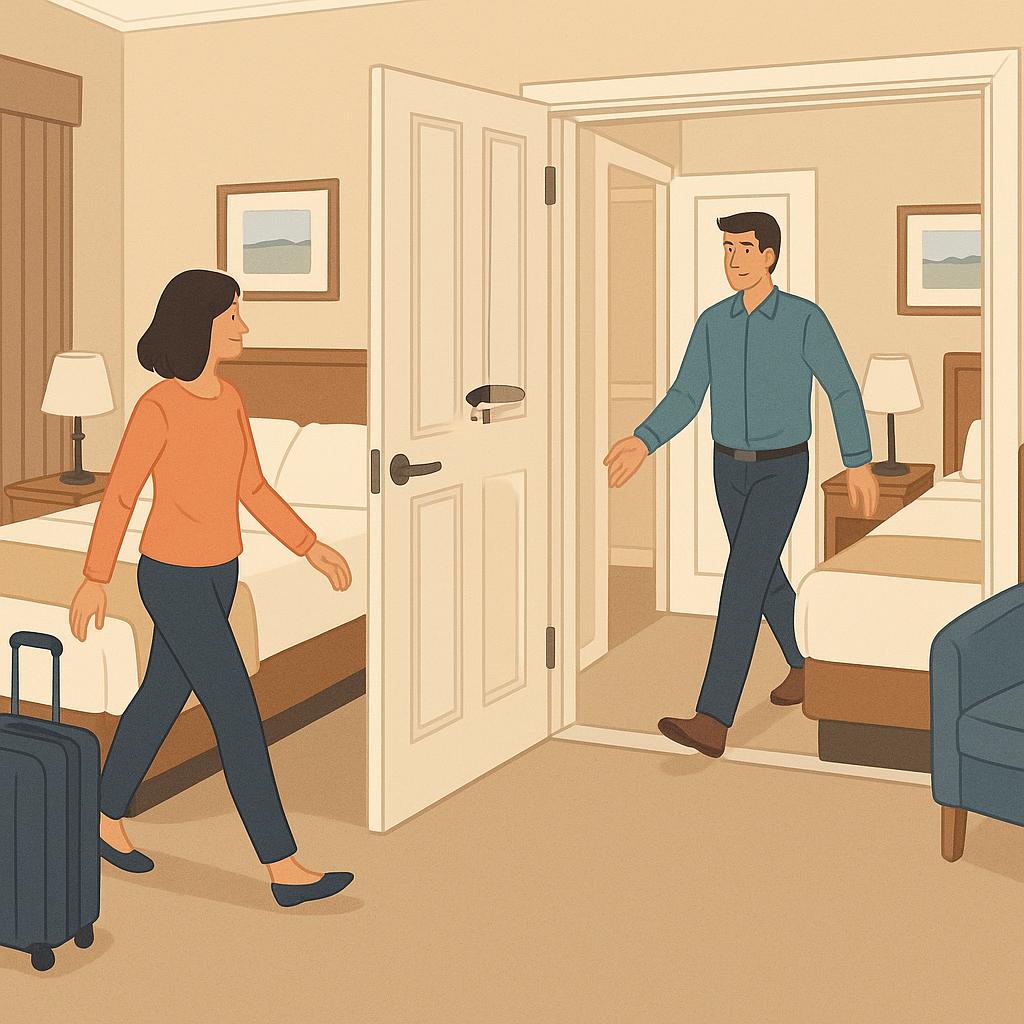
Connecting rooms feature an interior door linking two or more guest rooms, enabling movement between them without using the hallway. This arrangement balances shared living space and private sleeping areas, ideal for families or groups needing flexibility and privacy.
Example: A family of four may book two queen rooms with a locked connecting door—parents in one room, children in the other—allowing easy family gatherings and privacy.
What Are Adjoining Rooms?
Adjoining rooms are two hotel rooms positioned next to each other, sharing a common wall or entry area but lacking an internal connecting door. Guests must use the hallway to move between rooms.
Example: Two colleagues can reserve adjoining rooms to stay nearby while maintaining independent spaces.
Key Differences Between Connecting and Adjoining Rooms
- Access Between Rooms: Connecting rooms have an interior door; adjoining rooms do not.
- Privacy: Connecting rooms facilitate communication; adjoining rooms offer more separation.
- Availability: Connecting rooms are less common and often require special requests; adjoining rooms are generally easier to secure.
- Intended Use: Connecting rooms suit families or groups needing close access; adjoining rooms fit individuals wanting proximity without shared space.
Pros and Cons of Connecting and Adjoining Rooms
Connecting Rooms
- Pros:
- Direct internal access without hallway exposure.
- Combines privacy with connected living space.
- Well-suited for families and groups.
- Cons:
- Limited availability, often requiring advance requests.
- Possible noise transfer through the connecting door.
- Potentially higher cost or booking complexities.
Adjoining Rooms
- Pros:
- Easier to book with fewer restrictions.
- Maintains proximity while optimizing privacy.
- Suitable for groups needing separate spaces.
- Cons:
- No internal access; hallway use required.
- Less convenient for families or close companions.
- Adjacent room noise may still be a factor.
Common Mistakes When Booking These Rooms
- Confusing adjoining and connecting rooms, leading to unwanted room arrangements.
- Failing to explicitly request connecting rooms, resulting in separated accommodations.
- Overlooking whether connecting doors are locked or accessible.
- Ignoring hotel policies and availability during peak periods.
- Underestimating noise transmission from shared walls or doors.
Pro Tips for Booking and Using These Rooms
- Specify “connecting rooms” when making reservations and confirm availability directly with the hotel.
- Request early check-in to verify room layout and door functionality.
- Inquire about soundproofing to ensure guest comfort, especially for light sleepers.
- Use connecting rooms for family trips to balance privacy and closeness.
- Choose adjoining rooms for business travelers who prefer independent spaces nearby.
- Leverage loyalty programs to increase chances of preferred room assignments.
Room Booking Checklist
- Identify your group’s preference: privacy versus proximity.
- Contact the hotel in advance to confirm connecting room availability.
- Explicitly request connecting rooms when booking.
- Confirm whether connecting doors lock from one or both sides.
- Review room locations and floor plans if available.
- Ask about any additional fees or policies related to these room types.
- Plan room usage to optimize shared spaces efficiently.
Tools and Resources
- Hotel Reservation Platforms: Sites with filters for room types (e.g., Booking.com, Expedia).
- Direct Hotel Contact: Calling or emailing hotels to verify room configurations.
- Travel Forums and Reviews: Platforms such as TripAdvisor provide insights on connecting room availability.
- Floor Plans and Maps: Some hotels publish layouts showing room adjacencies.
- Travel Agents: Professionals experienced in securing connecting room arrangements.
Frequently Asked Questions
Can I request connecting rooms after booking?
Yes, though availability depends on the hotel’s inventory. It’s best to request connecting rooms during booking and reconfirm closer to arrival.
Do connecting rooms have soundproof doors?
Not always. Door quality varies by property; inquire specifically about soundproofing if noise sensitivity is critical.
Are adjoining rooms always side-by-side?
Typically, yes. They share a common wall but lack an internal connecting door.
Is there an extra charge for connecting rooms?
Some hotels may apply a premium due to limited availability; confirm pricing in advance.
Are connecting and adjoining rooms available at all hotels?
No, availability varies widely. Larger hotels and resorts more commonly offer connecting rooms.
Can connecting rooms accommodate wheelchair access?
Often yes, but verify specific accessibility features directly with the hotel.
Are connecting rooms safe for children?
Generally, yes. Confirm that connecting doors can be securely locked or monitored for safety.
Conclusion and Next Steps
Knowing the difference between connecting and adjoining rooms is key to choosing accommodations that fit your group’s needs. Connecting rooms provide convenient internal access ideal for families or groups wanting to stay connected, while adjoining rooms offer proximity with separate entrances, suited for guests preferring privacy.
Your next steps:
- Assess your group’s priorities regarding access and privacy.
- Contact your preferred hotel to inquire about connecting room options and policies.
- Include connecting room requests when booking and reconfirm before arrival.
- Use the provided checklist and tips to ensure a smooth experience.