
Introduction
Traveling to new destinations offers incredible experiences and memories, but managing money while on the move can be a source of stress and risk. Handling money safely is essential to avoid theft, fraud, or loss that could quickly derail your trip. This guide covers practical, trusted methods to manage your finances securely, helping you enjoy your journey worry-free.
Quick Answer: The Safest Ways to Handle Money While Travelling
- Use a combination of payment methods: cash, credit/debit cards, and mobile payments.
- Keep your money and valuables divided across multiple secure locations on you.
- Utilize reputable financial institutions and services to minimize risk.
Key Takeaways
- Always carry more than one form of payment to ensure backup options.
- Be alert to pickpockets and scams, especially in crowded or tourist-heavy areas.
- Set up mobile alerts and apps for quick account monitoring and security.
- Understand local currency nuances and up-to-date exchange rates in advance.
Step-by-Step Guide to Safely Handling Money While Travelling
1. Plan and Prepare Before Your Trip
- Notify your bank and credit card issuers about your travel dates and destinations to avoid accidental card freezes.
- Research currency exchange rates and identify trustworthy exchange services; avoid airport currency counters when possible due to poor rates.
- Download official banking and budgeting apps to monitor expenditures and receive alerts easily.
2. Carry a Mix of Payment Options
- Cash: Bring local currency in small denominations for convenience and tips—avoid carrying large sums.
- Credit/Debit Cards: Choose cards with travel benefits like no foreign transaction fees and fraud protection.
- Mobile Payments: Set up Apple Pay, Google Pay, or similar services for secure, card-free transactions where accepted.
3. Secure Your Money and Financial Documents
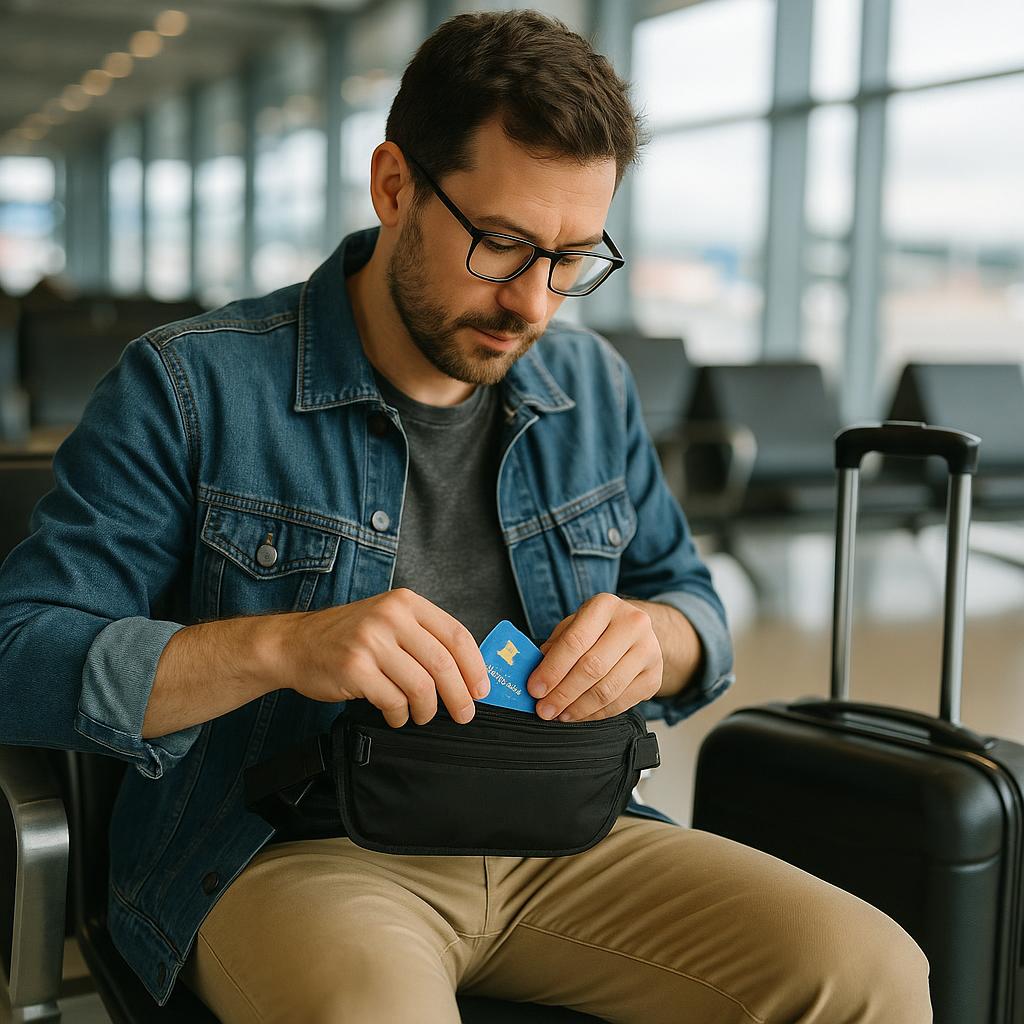
- Use a money belt or hidden pouch under clothing to store cash and cards securely.
- Split your money between different secure locations—wallet, hotel safe, day bag—to reduce risk if one stash is lost or stolen.
- Never carry all your cash and cards in one place or visible pockets.
4. Use ATMs Wisely
- Withdraw cash from ATMs located inside banks or reputable stores to avoid tampering or skimmers.
- Avoid standalone or poorly lit street ATMs, often targets for fraud.
- Understand your bank’s fees for international ATM withdrawals and check limits beforehand.
5. Be Cautious with Currency Exchange
- Avoid street exchangers promising excellent rates—they may counterfeit or provide fraudulent notes.
- Stick to official currency exchange offices or banks, which offer safer, transparent transactions.
- Learn to calculate exchange rates approximately to spot unfair offers.
6. Monitor your Accounts Regularly
- Check your bank and card statements daily or as often as possible during travel.
- Set up mobile notifications for all transactions to detect unauthorized use promptly.
Common Pitfalls to Avoid
- Carrying large amounts of cash increases theft risk and loss impact.
- Using unknown or suspicious ATMs may expose you to card skimming or fraud.
- Ignoring alerts about unusual account activity can lead to prolonged fraud and losses.
- Oversharing travel plans or financial details with strangers or on social media opens doors for targeted scams.
Real-World Examples
Example 1: A traveler in a European city carried all cash in a backpack, which was stolen. Had they used a money belt and spread their funds between cards and cash, the loss would have been less impactful.
Example 2: In a high-risk region, another traveler used prepaid travel cards and mobile payments, withdrawing cash only from bank ATMs. This approach minimized exposure to crime and financial fraud.
Frequently Asked Questions (FAQ)
- What if my card is stolen abroad?
Notify your bank immediately to block the card. Use backup payment options until your card is replaced. - Is it safe to use mobile payments internationally?
Generally yes, if accepted by merchants and using secure networks. Always use VPN and avoid public Wi-Fi. - How much cash should I carry?
Carry only enough for small expenses and emergencies — typically a few hundred in local currency, adjusted by destination. - Are traveler’s cheques still useful?
Less common now due to cards and mobile payments but can be a secure backup if available. - What should I do if I suspect fraud?
Contact your bank right away, freeze accounts if possible, and report the fraud to local authorities. - Can I rely on ATMs for all cash needs?
It depends on your destination’s safety and ATM availability; plan accordingly and have backup cash. - How to avoid dynamic currency conversion scams?
Always opt to be charged in the local currency when paying by card to avoid unfavorable exchange rates.
Conclusion
Handling money safely while travelling requires preparation, vigilance, and smart use of multiple payment methods. By spreading risk, monitoring accounts closely, and avoiding common pitfalls, you can protect your finances and focus on enjoying your trip. Remember, secure money management is as vital as your itinerary for a smooth travel experience.
For more travel preparation tips, check our Carry-On Only Travel Guide and Expense Planning Guide.
Find trusted accommodations through our recommended booking platform to keep your travel safe and hassle-free.
Money Handling Checklist for Travellers
- Inform banks about travel plans
- Carry multiple payment types
- Divide cash in hidden pouches/money belts
- Use ATMs inside reputable locations
- Exchange currency only at authorized venues
- Set up mobile banking alerts
- Monitor transactions daily
- Avoid sharing travel plans publicly
Tools & Resources for Safe Travel Finance
- Official bank mobile apps with multi-factor authentication
- Currency conversion apps like XE Currency or OANDA
- Mobile payment platforms (Apple Pay, Google Pay)
- Travel budget planners (e.g., Trail Wallet, TravelSpend)
- Local embassy websites for emergency contact info