
Quick Answer
To build a 7-day city break for beginners, first identify your destination and its key attractions. Plan a balanced itinerary with sightseeing, meals, and rest spread across the days. Book accommodation and transportation ahead of time, focusing on convenience and safety. Finally, pack efficiently and ensure your travel documents are prepared.
Key Takeaways
- Research your destination’s must-see sights and local highlights.
- Create a flexible day-to-day itinerary balancing activity and rest.
- Choose accommodation based on location and budget, prioritizing safety and ease of access.
- Include breaks in your schedule to prevent travel fatigue.
- Be aware of common pitfalls, such as overbooking your days or neglecting local customs.
Introduction
A city break typically involves spending a few days in an urban destination to explore cultural sites, enjoy local cuisine, and experience the atmosphere. For beginners, a 7-day city break strikes a perfect balance: it allows enough time to immerse oneself without feeling rushed or overwhelmed. This guide will walk you through each step to build an enjoyable and manageable 7-day city break.
Step 1: Choosing Your City
When selecting a city, consider your interests (art, history, nightlife, nature), budget constraints, and travel accessibility. Good beginner-friendly cities often have comprehensive public transport, safe neighborhoods, and a variety of activities suitable for all energy levels.
Examples of beginner-friendly city break destinations include Copenhagen, Lisbon, Amsterdam, and Prague, each known for walkability and vibrant culture.
Step 2: Researching and Prioritizing Attractions
Use reputable travel guides, blogs, and local tourism websites to compile a list of the top attractions. Online review platforms can help gauge visitor experiences and identify crowd patterns.
Prioritize sights by personal interest and proximity; grouping nearby spots on the same day saves transit time. For instance, visiting a cluster of museums in one neighborhood rather than scattered locations across the city.
Step 3: Planning Your Itinerary
Structure each day to balance sightseeing, meals, and downtime. Avoid cramming too many activities. For example, start with a morning museum visit, have a leisurely lunch, then explore a park or local market in the afternoon.
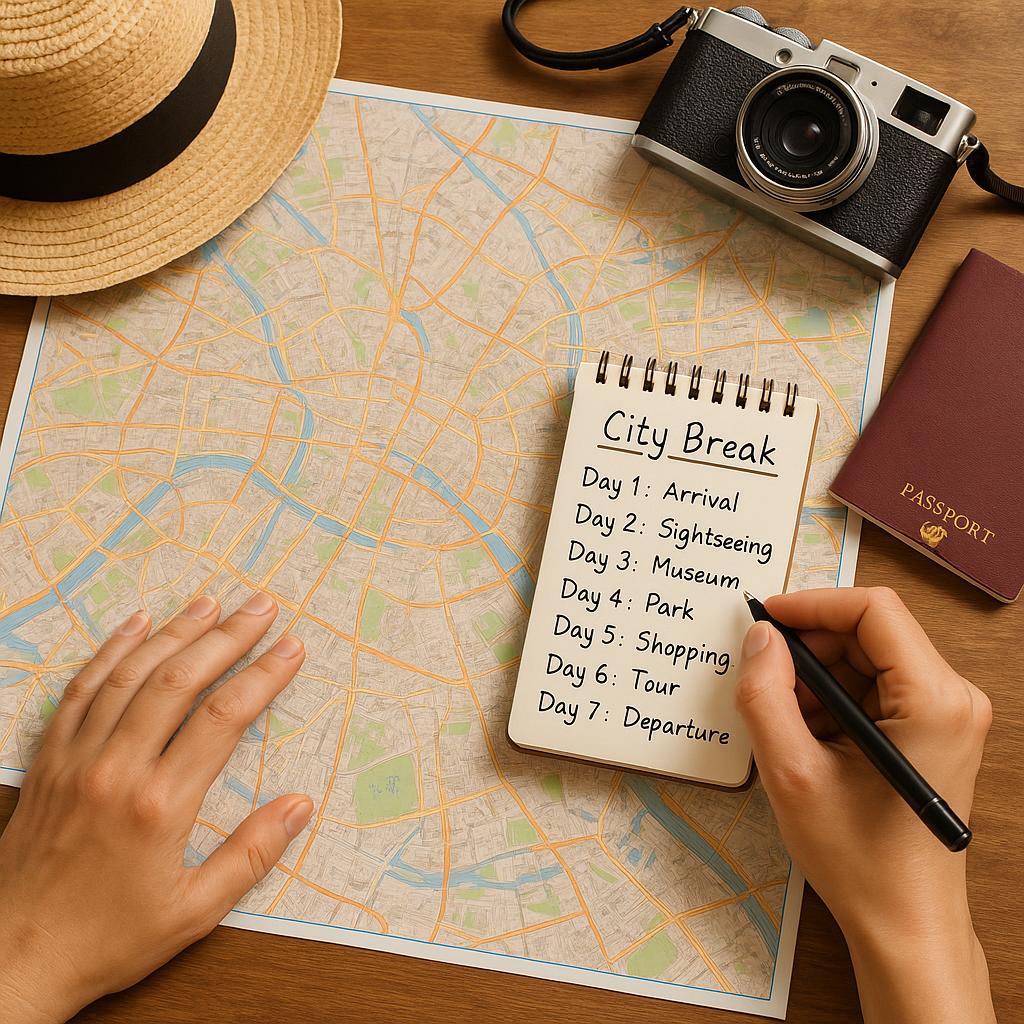
A sample 7-day plan might include:
- Day 1: Arrival and orientation walk
- Day 2: City center landmarks
- Day 3: Museums and galleries
- Day 4: Neighborhood exploration and markets
- Day 5: Day trip or unique local experience
- Day 6: Leisure day for shopping or cafes
- Day 7: Departure or last-minute sightseeing
Build flexibility into your schedule to accommodate spontaneous discoveries or rest.
Step 4: Booking Accommodation and Transport
Pick accommodation close to major transit hubs or city centers to maximize sightseeing time and minimize commuting. Compare options including hotels, Airbnb, and hostels based on comfort level and budget.
Organize airport transfers beforehand if possible, and explore local transport passes to save money. Research walking routes to attractions—cities like Amsterdam or Copenhagen are very pedestrian-friendly, reducing the need for frequent public transport.
Step 5: Packing and Preparing
Bring essential documents such as ID, travel insurance, and accommodation confirmations—keep digital and physical copies. Utilize travel apps for navigation, translation, and safety updates.
Pack light with versatile clothing suitable for the expected climate. Include comfortable walking shoes and a portable charger. Weather can vary even within the same season, so layers are advisable.
Common Pitfalls and How to Avoid Them
- Overpacking the itinerary: Avoid exhaustion by allowing downtime and realistic pacing.
- Ignoring local customs: Research cultural etiquette to respect your host city and avoid discomfort.
- Last-minute bookings: Book accommodation and key transport in advance to reduce stress and cost.
- Neglecting safety precautions: Stay informed about safe areas and travel advisories.
FAQ
- How much walking should I expect in a city break?
Expect moderate walking daily; comfortable shoes are essential, and many cities offer public transport alternatives. - What’s the best way to save money on a city break?
Book tickets and accommodations early, use city transport passes, and eat where locals do rather than only tourist spots. - How to handle language barriers?
Learn a few key phrases, use translation apps, and prioritize destinations with some English or your native language accessibility. - What if I change plans during the trip?
Keep your schedule flexible. It’s normal to adjust plans based on mood, weather, or new recommendations. - Should I buy tickets to attractions in advance?
For popular sights, advance bookings save time and guarantee entry, especially when limited capacity is expected.
Conclusion
A successful 7-day city break begins with thoughtful destination selection, thorough research, and structured yet flexible planning. Booking your accommodation and transport in advance adds convenience and reassures peace of mind. Packing appropriately and preparing essential documents ensures you’re ready for a smooth journey. Remember to balance sightseeing with rest and embrace the unexpected moments that make travel memorable.
For further guidance, see our detailed 7-day travel itinerary tips and how to plan a 48-hour itinerary step by step for hands-on examples.
Beginner’s 7-Day City Break Planning Checklist
- Choose your city considering interests, budget, and accessibility
- List and prioritize attractions and activities
- Create a flexible day-by-day itinerary with balanced activities and rest
- Book accommodation near transport hubs or city center (consider trusted booking platforms)
- Arrange airport transfers and local transport options in advance
- Prepare essential documents and backups
- Pack lightweight, versatile clothing and comfortable shoes
- Download helpful travel apps (maps, translation, safety updates)
- Research local customs and essential travel tips
- Plan some flexibility for unexpected discoveries or rest days
Helpful Tools and Resources
- Booking.com alternative – accommodation booking
- 7-day travel itinerary planning guide
- Google Maps – navigation and public transportation info
- Language translation apps (e.g., Google Translate, iTranslate)
- Currency conversion apps for budgeting
- Weather apps to monitor local forecasts