
Table of Contents
- Quick Answer: What Are the Key Water Park Safety Tips?
- Why Is Water Park Safety Important?
- How Can Visitors Prepare for a Safe Visit?
- Common Water Park Safety Mistakes to Avoid
- Pro Tips for Water Park Safety
- Water Park Safety Checklist
- Tools and Resources for Water Park Safety
- Pros and Cons of Water Park Safety Measures
- Frequently Asked Questions (FAQ)
- Key Takeaways
Quick Answer: What Are the Key Water Park Safety Tips?
Key water park safety practices include vigilant supervision of children, strict adherence to posted rules, use of appropriate flotation devices, maintaining hydration, and awareness of swimming capabilities. Additionally, applying sun protection and following staff instructions are essential to effectively reduce risks.
Why Is Water Park Safety Important?
Water parks offer thrilling attractions but carry inherent risks such as drowning, slipping, sunburn, and injuries from improper equipment use. Prioritizing safety protects visitors’ wellbeing, limits operator liability, and ensures a confident, enjoyable experience for all.
How Can Visitors Prepare for a Safe Visit?
Understand the Rules Before Arrival
Review the park’s official safety guidelines online, noting any unique behavioural rules, height or weight restrictions, and recommended safety equipment.
Assess Swimming Skills and Use Flotation Aids
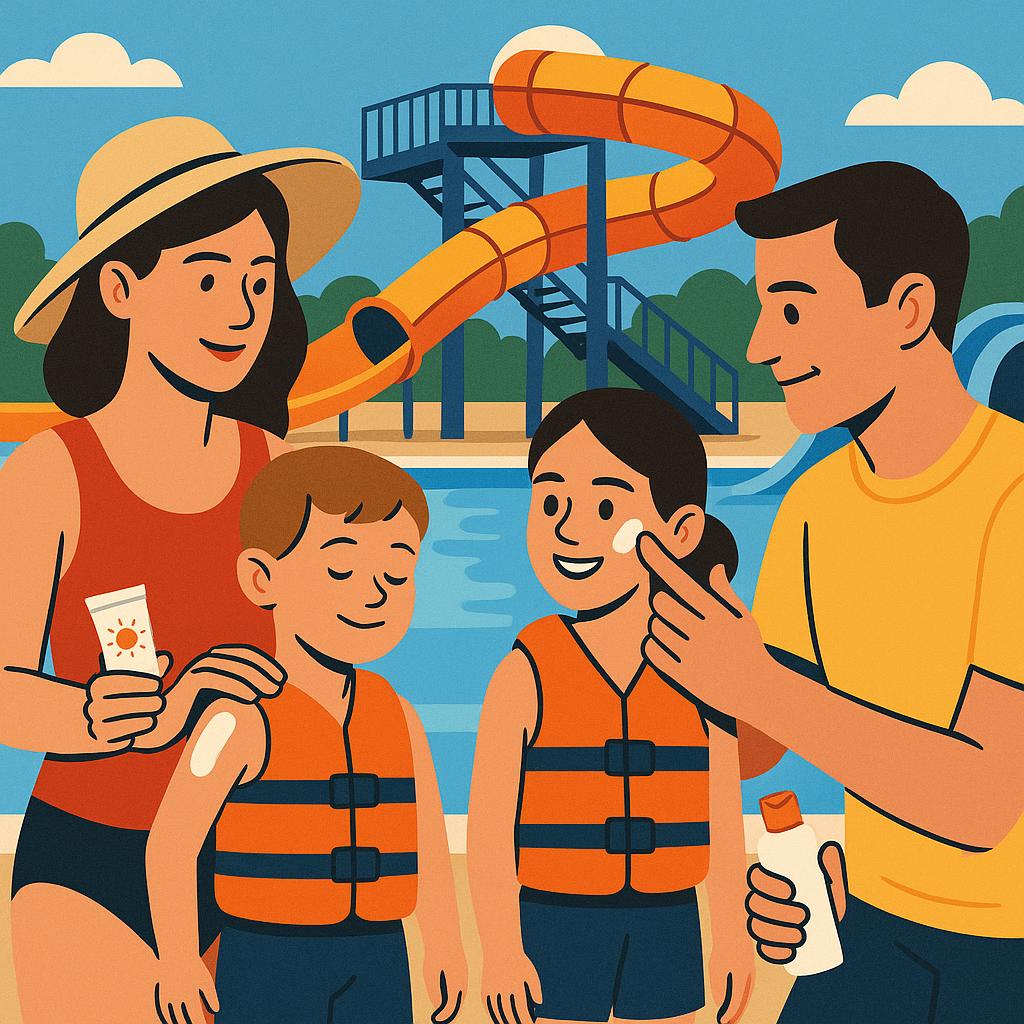
Ensure weaker swimmers wear approved life jackets. Many parks provide or require life jackets for children and inexperienced swimmers; compliance is critical.
Pack Essential Safety Gear
- High SPF sunblock, reapplied every two hours
- Well-fitting water shoes to prevent slips and foot injuries
- Protective swimwear to reduce friction and skin abrasions
- Personal flotation devices if not provided on-site
Plan for Supervision
Assign clear supervisory roles among adults and consider using contact information bracelets for children in crowded areas.
Common Water Park Safety Mistakes to Avoid
- Ignoring ride height or health restrictions, increasing injury risk
- Overestimating swimming ability and entering deep or rough areas unsupervised
- Failing to reapply sunscreen, leading to sunburn or heat-related illness
- Allowing children to wander without clear boundaries or supervision
- Using mobile phones excessively, reducing attention to child supervision
Pro Tips for Water Park Safety
- Arrive early to avoid crowds and allow focused supervision
- Set a designated meeting point in case of separation
- Maintain consistent hydration to offset sun exposure and physical exertion
- Wear rash guards or UV-protective swimwear for prolonged sun exposure
- Observe and follow lifeguard instructions as the primary safety guide
- Take regular breaks to prevent fatigue
- Pre-teach children water safety and behavioural expectations to promote safer choices
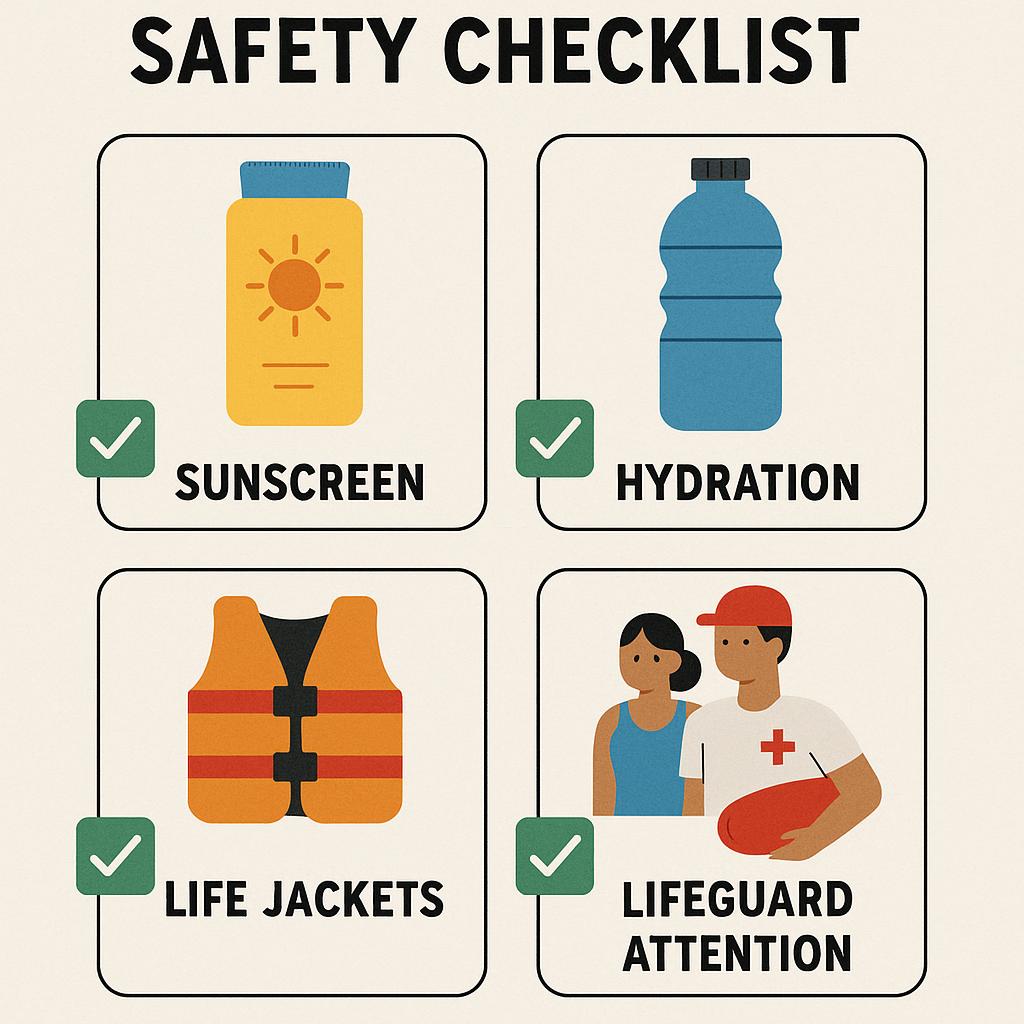
Water Park Safety Checklist
- Review park rules before arrival
- Confirm proper fit and use of flotation devices
- Apply and reapply sun protection at least every two hours
- Clearly designate supervision responsibilities
- Establish and communicate an emergency plan and meeting point
- Wear slip-resistant footwear when walking around the park
- Stay hydrated and eat balanced meals to maintain energy
- Observe all ride restrictions related to height, age, and health
- Monitor children closely, especially in shallow or splash zones
- Respect lifeguard instructions and official announcements
Tools and Resources for Water Park Safety
- Life Jackets/Flotation Devices: Ensure Coastguard-approved or compliant with UK safety standards
- UV Protection Swimwear: Rash guards offering UPF 50+ protection
- Water Shoes: Non-slip soles to prevent falls on wet surfaces
- Safety Bracelets or ID Tags: Secure contact information for children
- Mobile Apps: Some parks offer apps with safety alerts and lifeguard locations
- First Aid Kit: Most parks provide one; carrying a small personal kit is advisable
Pros and Cons of Water Park Safety Measures
| Safety Measure | Pros | Cons |
|---|---|---|
| Mandatory Life Jackets | Significantly reduce drowning risk; aid weaker swimmers | May restrict movement for strong swimmers; added cost for parks |
| Height/Weight Restrictions | Prevent injuries by ensuring ride suitability | Potential visitor disappointment; enforcement delays |
| Constant Lifeguard Presence | Enables quick emergency response; enhances safety perception | High staffing costs; effectiveness relies on training and vigilance |
| Sun Protection Enforcement | Reduces sunburn and heat-related risks | May slow entry process or require on-site purchases |
Frequently Asked Questions (FAQ)
1. Are water parks safe for non-swimmers?
Yes, if non-swimmers wear approved life jackets and remain in designated shallow areas under adult or lifeguard supervision.
2. How can parents supervise children effectively at a busy water park?
Assign supervision roles, set clear boundaries, use safety bracelets, designate a meeting point, and minimize distractions such as mobile phones.
3. What should you do if you notice someone struggling in the water?
Immediately alert the nearest lifeguard rather than attempting a rescue unless trained, to avoid personal risk.
4. How often should sunscreen be reapplied at a water park?
Apply sunscreen 30 minutes before water exposure and reapply every two hours or after swimming or towel drying.
5. Are there specific footwear recommendations for water parks?
Water shoes with non-slip soles provide traction on wet surfaces and protect against cuts and scrapes.
6. Can dietary precautions impact safety at water parks?
Maintaining hydration and balanced nutrition helps prevent fatigue, dizziness, and fainting, enhancing safety.
7. What is the best way to handle emergencies at a water park?
Know first aid station locations, communicate clearly with staff, keep emergency contacts handy, and follow staff instructions promptly.
Key Takeaways
- Review water park rules and accurately assess swimming ability before visiting.
- Maintain effective supervision and use appropriate safety equipment.
- Sun protection, hydration, and safe behaviours mitigate common health risks.
- Adhere to staff instructions and ride restrictions to prevent injuries.
- A clear emergency plan supports swift, effective responses.
For those planning visits to family-focused venues like the Great Wolf Lodge Water Park: The Ultimate Family Adventure Destination, applying these safety strategies ensures a secure, enjoyable experience.
Implementing these tips promotes a culture of responsibility and awareness among both operators and visitors, fostering safe enjoyment of aquatic environments.